Paint · Compare
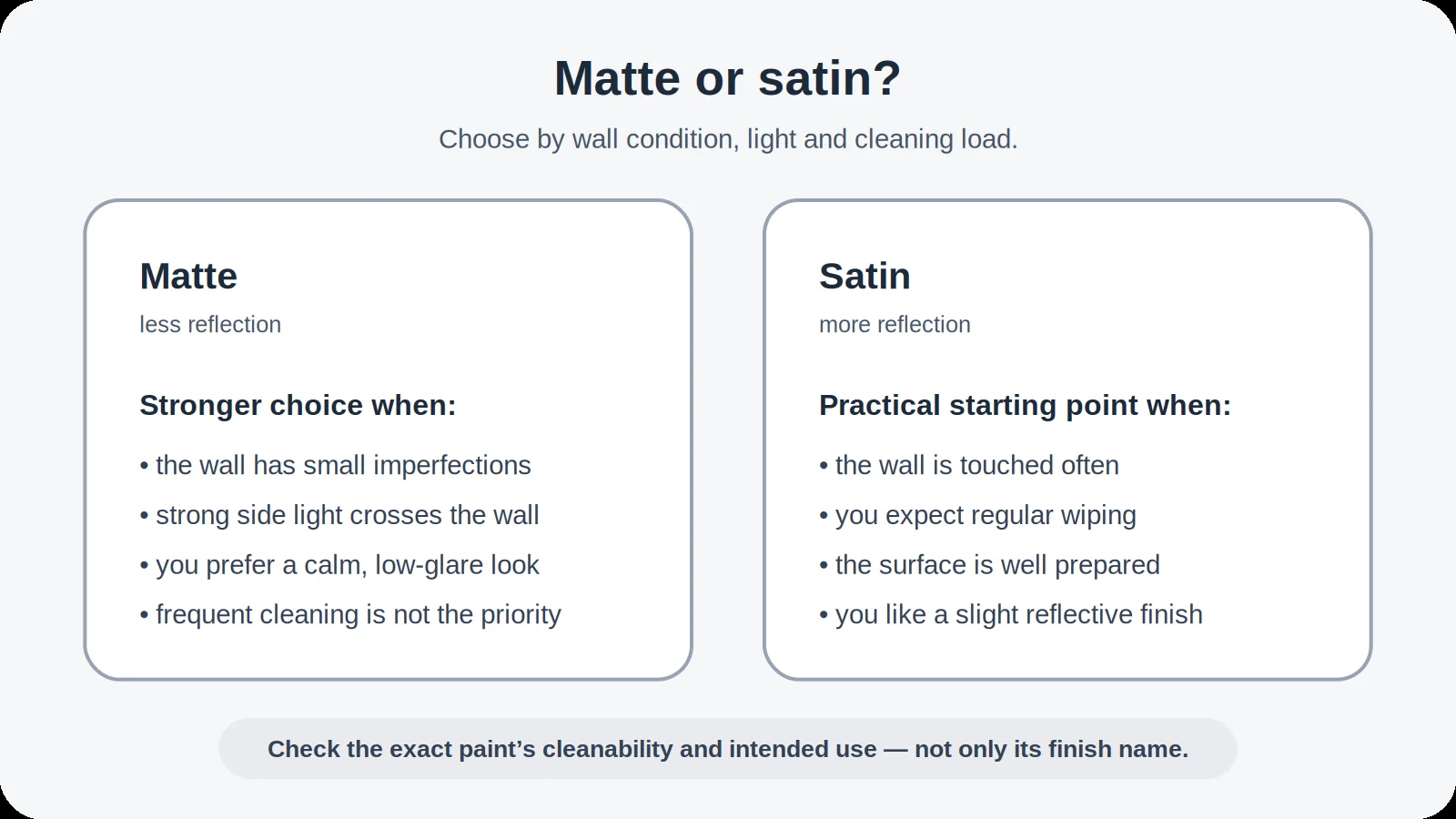
Do not choose from a swatch alone. Matte is usually more forgiving of small imperfections and glare, while satin is often a practical starting point for hard-working walls. Cleaning resistance, however, depends on the actual paint product, not just the finish name.
Quick choiceA practical starting point, not a universal rule.CriterionLean matteLean satin / low sheenSmall imperfectionsLower sheen usually hides them betterReflections can make surface texture easier to seeStrong side lightCalmer visual effectPreparation marks can become more visibleFrequent wipingCheck the product's declared cleanabilityOften a sensible starting point for busy areasVisible reflectionMinimalMore noticeableHumid roomChoose a product explicitly intended for the environment; sheen alone is not enough
When matte makes more senseIf the wall is not perfectly smooth, lower sheen usually makes small dents, patching marks and texture less obvious. This is especially useful under strong side light, which can otherwise reveal every change in the surface.Matte is a natural candidate for living rooms and bedrooms when you want a softer look. But do not assume that “matte” automatically means non-washable. Modern products vary considerably, so check the exact manufacturer's cleanability and maintenance guidance.
When satin has the practical edgeSatin and other low-sheen finishes reflect more light and are often offered for harder-working areas. Sherwin-Williams, for example, points to more durable finishes such as satin or semi-gloss where traffic or moisture is higher, but that does not make every satin paint equivalent.Hallways, children's rooms and walls around switches and handles are typical cases where maintenance matters more. The trade-off is that extra sheen can expose imperfections and uneven preparation more clearly.
Choose by roomLiving room and bedroomIf the wall has minor imperfections or strong side light, start with matte. If the surface is smooth and you expect more frequent wiping, compare a suitable low-sheen option as well.Hallway and child's roomGive priority to the stain and cleaning resistance you actually need. Then choose the lowest sheen that meets the maintenance requirement and gives you the appearance you prefer.Kitchen and bathroomDo not rely on the word “satin” alone. Choose a paint intended for the environment and follow the manufacturer's requirements for preparation, primer, ventilation and application.
Finish names are not a universal measuring scale“Eggshell,” “low-lustre” and “satin” can describe nearby but not identical sheen levels across manufacturers. Compare technical sheets for the products you are actually considering rather than relying only on the category label.
Five checks before buyingHow smooth is the wall? The more imperfections it has, the more valuable a lower-sheen test becomes.How does light hit it? Test a sample on the actual wall rather than only on card.How often will you clean it? Look for specific stain and cleaning-resistance claims.What is the environment? For kitchens or bathrooms, confirm that the exact product is intended for the room.How does the dry sample look? Check it in morning light, evening light and artificial lighting.Bottom line: If surface imperfections and a quiet appearance matter most, start with matte. If cleaning load matters more, compare satin or another suitable low-sheen product. Confirm the final choice against the technical specification of the exact paint.
SourcesSherwin-Williams — How to Choose Paint FinishesSherwin-Williams — Burnishing / high-traffic cleaning guidanceDulux Trade Paint Expert — Kitchen & Bathroom FAQsChecked: September 9, 2026.


